Sept 2026

How to read a Rubree report
Five parts, in the same order, every time. Once you have read one, you know how to read the rest.
Fit tells you whether a funder is worth the weeks, before you write. Score reads your draft against the funder's own words, before you send. You write every word.
A map, not a score.
Bring the funder's tax returns and its own words. Fit sets them next to what you told it about your organization and maps the fit six ways.
A read on your draft, not a rewrite.
Upload every funder document and every piece of your draft. Score finds the rules and the scoring, then reads your draft against each one.
Rubree uses AI to read. It never uses AI to write.
Finding the rules inside a sixty-page notice, matching a draft against them, and noticing a requirement that went unanswered are reading jobs. Rubree does them with an AI model. It hands back questions, page numbers, and the funder's own words. It never hands back a sentence you could paste.
That is what keeps you inside a funder's AI policy. Those policies are about generated text in the application, not about the tools you used to read.
Grants are not writing contests. They are investment decisions.
You can write a beautiful proposal and still lose, because the funder was never a fit, or because the draft missed the one thing a reviewer needed. You find out after forty hours, in a form letter that never says why.
Rubree catches both before they cost you. The writing stays yours. So does your voice.
Is this funder worth the weeks?
The proposal, in your voice.
What is missing before you send.
Nonprofit staff, fundraisers, executive directors, founders, and independent grant writers. The people doing the work without a research team behind them.
If you have ever put a week into a proposal that was never going to land, this is for you.
A grant writer, for grant writers. The story is on the About page.
A high score is not a promise of funding. Funders weigh things a rubric can't measure, like trust, timing, and shifting needs.
Rubree is opening to a first group of grant writers and consultants. Get on the list and you will be among the first in.

Rubree does not ask what you have. It asks where you are.
You have a funder in mind and no draft. That is Fit.
You have the funder's documents and something written, even a rough draft. That is Score. Score can also read the funder's documents alone, before you write, and list every requirement in the funder's order.
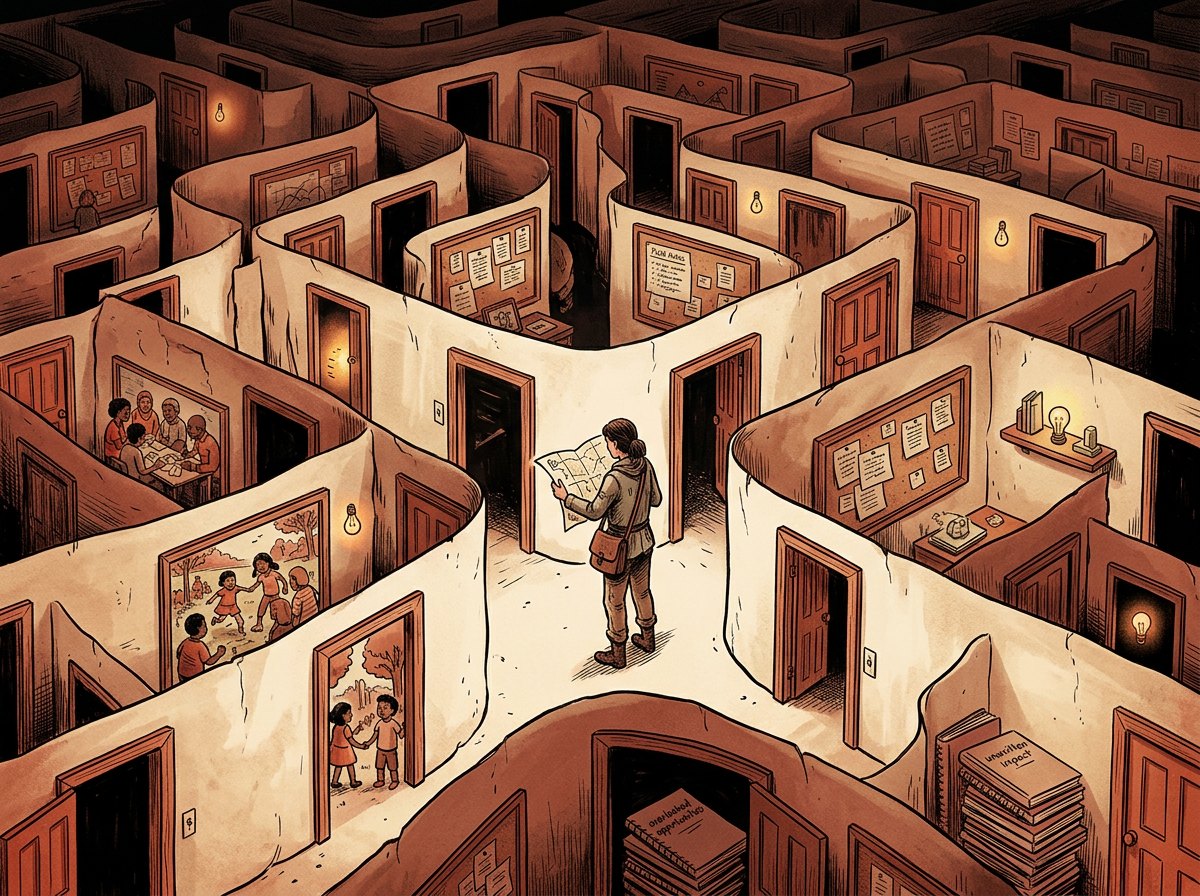
Fit reads a funder's tax returns and its own words, sets them next to what you told it about your organization, and maps the fit six ways. It is a map, not a score. Nothing in it is totaled.
Three years of the funder's 990-PF, as PDF or as e-file XML, in any mix. The funder's guidelines by link, upload, or paste. Your Basecamp: one document that says who you are, what you do, and what you are asking for.
The ask. Are you eligible. Six ways this funder fits you, each with one verdict: Aligned, Partly aligned, Not aligned, Stretch, or Can't tell. What the funder says it wants next to what it actually funded. Your fit at a glance. What does not add up. What you do next. Your decision.
It never finds funders for you. It never prints a number that is not in the filing. It never decides. The last line hands the decision back to you.
What the funder says it wants, next to what it actually funded.
A funder that excludes something today may have funded it two years ago. Fit sets the guideline beside the grant list, dates both sides, and hands you the question for the program officer: is this exclusion new, and does it reach us?
Score reads the funder's documents, finds the scoring if there is one, and reads your draft against every requirement. It says what is missing, what does not add up, and what to fix first.
Every funder document: the notice, the application guide, forms, the FAQ. Every piece of your draft as Word or Excel: narrative, abstract, budget, budget narrative, letters, attachments. Google Docs do not work; download them as Word first.
The score and the bars. One section per criterion, with your words on the left and Rubree's notes in the margin. Every requirement, and whether your draft answers it. Page and word limits. What does not add up. What you do next, starting with Before you submit.
No draft yet? Give Score the funder's documents alone. It lists every requirement, how each part is scored, and what each part is worth, in the funder's own order. Read it before you write, and again before you send.
Every line in a Score report is a question, a page number, or the funder's own words.
Score checks itself before it prints: every finding names a page, every quote is in the source, and no note runs long enough to be a paragraph you could lift. That is why a Score report is safe under a funder's AI policy. The AI read the documents. You wrote the proposal.
A high score is not a promise of funding. Funders weigh things a rubric can't measure, like trust, timing, and shifting needs.
How funders read, how to run each tool, and what thirty-five years of this work taught me. A new post most weeks, in my own words.
Five parts, in the same order, every time. Once you have read one, you know how to read the rest.

Where the name comes from, and why the tool never touches your page.
Funders weigh things a rubric cannot measure. What the score is for, and what it is not.

The requirement is rarely where the form says it is.
One document, facts only, built from the last three proposals you sent.
Three places, all free, and which one to trust when they disagree.
Screen recordings, coming this fall: how requirements hide inside application questions, and a scoring session on a funder that publishes no rubric.
A place for grant writers to trade what actually works, swap a draft for an honest read, and remember you are not the only one up at 3 a.m. It is free.
This score is a tool. It is not a promise that you will win the grant.
Funders do not always fund the top score. They may pick a group they already trust. They may fund a smaller group doing great work, even with a less polished application. A funder's needs can shift fast. A crisis or a new priority can change who gets funded, even mid-cycle.
When a funder has not published a rubric, we build one. We use the funder's own questions, guidelines, and stated priorities to do it. We do not know the exact weight the funder gives each question or attachment, like a budget or work plan.
That means a high score does not guarantee funding. A lower score does not rule it out either.
This report will not predict the outcome. Its job is simpler: keep you focused on the funder's questions, show you the gaps, and help you check that you fully answered what was asked. We built this method from research on how foundations review and score grants. But the final call is always made by people, not by a score.
Grant writers used to mark up drafts in red ink in the margin — questions, flags, "check this." Rubree does the same job: it sits beside your draft and points at what needs attention, it doesn't touch the page. You write the manuscript. Rubree stays in the margin.
The name itself comes from rubrica, the red ochre pigment medieval scribes used for headings and notes. A rubricator marked what mattered on a page someone else wrote. That is the whole job description.
Every Rubree report has five parts in the same order. Once you have read one, you know how to read the rest.
What the tool was given. Top of the page. The files on each side by name, the dates on both sides, what was missing, and one line that says whether the report's own checks passed. You learn the report is sound before you read it, not after.
How to read this. One paragraph on what the report is and is not. It always carries this line: run it twice and the two reports will not match line for line. What shows up both times is what to act on first.
The findings. The body. On Fit, six ways the funder fits you. On Score, the score, each criterion, and every requirement. On the reading report, everything the funder asks for, in the funder's order.
What does not add up. Figures that disagree with each other, a claim that conflicts with a date, a filing whose total does not match its list, a statistic with no source. Only figures, never judgments.
What you do next. A list you can act on. On Score it starts with Before you submit, in order of cost. On Fit it is the questions to take to the program officer, and then one last line, Your decision, because that one is yours.
Two things never change. Every finding carries a page number, and the funder's words are always in quotation marks and always the funder's own.

Rubree is open to a first group of grant writers and consultants at no charge. The price is set when the beta closes, and the people in the beta hear it first.
One credit is one proposal.
A credit covers one funding opportunity from start to finish: every Fit run on the funder, every Score run on the draft, as many times as you need, until you submit. You never pay twice for the same proposal, and you never pay for a run.
That is on purpose. A tool that charges per run teaches you to run it less. Rubree wants you to run it again.
Organizations that want Rubree for a whole development team, and trainers who want to run a cohort through it, start with a conversation. The Contact page is the place to begin.


Kai. Thirty-five years of grants, and the person who answers kai@rubree.com.
I've been writing grants for more than 35 years.
I've won money that changed what an organization could do. I've also written proposals I was proud of that never got funded, and sat with the particular sting of a rejection that never tells you why.
That's the work. The wins and the ones that got away. The late nights. The funder who moves the goalposts. The program officer who says the writing wasn't strong enough, when the writing was fine and the fit was wrong.
What I never had was a set of simple tools built for people like me. Not the pricey prospecting platforms made for big shops with research teams. Something plain. Something that gives a working grant writer a head start without costing what a small nonprofit can't spare.
So I built it.
Rubree is that, distilled to the basics. It will not write your proposal, and it will not pretend to. It tells you whether a funder is worth chasing, and it shows you what's missing in your draft before you send it. That's the whole thing. No hype. No promise that AI is about to fix the sector by Tuesday. Just the head start I wish I'd had.
If you do this work too, I'd like to know you.
Kai · Founder, Rubree
Rubree is an AI tool; it is not a professional grant writer; that is you. Nor does it possess lived experience, expertise, or knowledge; only you know about the nuances of the social issues you care enough about to work until 3 a.m. Rubree is an AI tool created by a human with three decades of professional grant writing experience. The tool you used today is a testament to that journey. The plain truth is you are the one in charge; your voice carries weight, and the information in a report informs you; it doesn't decide for you.
Technology is how I built a career I might not have had access to otherwise. That is the whole reason I trust it beside me and never in front of me. People keep the decisions. The tool keeps the margin.
Grant writers used to mark up drafts in red ink in the margin — questions, flags, "check this." Rubree does the same job: it sits beside your draft and points at what needs attention, it doesn't touch the page. You write the manuscript. Rubree stays in the margin.
A place for grant writers to trade what actually works, swap a draft for an honest read, and remember you're not the only one up at 3 a.m. It's free. Come in.
No. Rubree reads, checks, and asks. When it finds a gap, it hands you a question and a page number, not a paragraph. You write every word yourself, in your own voice.
Because that's not the job it's built for. Rubree reads the funder's own words and shows you where your answer lines up and where it doesn't — the alignment is ours to check, the words stay yours to write. A tool that wrote your proposal for you would be answering a question nobody asked. The harder question, the one that actually decides whether you win, is whether this funder is worth the weeks it takes to write anything at all. That's the question Rubree helps you answer.
Fit comes first. It tells you whether a funder is worth chasing, before you write anything. Score comes after you have a draft: it reads your proposal against the funder's own requirements and shows you what is missing and where you would lose points. Fit, then Score.
Yes, and that is by design. The rules that make funders nervous are about machine-written text ending up in a submission. Rubree uses AI to read the documents and never to write the proposal. What comes back is questions, page numbers, and the funder's own words. There is nothing in a report you could paste.
No. Fit is not a funder database and it will not go hunting for prospects. You bring a funder you already found, and Fit tells you whether it is worth your time. It helps you decide, not search.
A general chatbot will happily write your proposal, invent a statistic, and guess at a funder's priorities. Rubree will not. Every claim about a funder traces back to the funder's own words or is plainly marked as a reading. Every figure can be checked against the page it came from.
Most foundations don't. Score reads whatever the funder did publish: criteria with points, criteria without points, or only a list of requirements. It tells you which of those it found, and it never invents a number the funder did not give. When there is no scoring at all, you still get every requirement and whether your draft answers it, which is the finding that costs the most when it is missed.
Because Rubree reads with an AI model, and a model does not read the same way twice. Run it twice on the same draft and the two reports will not match line for line. Some findings show up in one run and not the next. Treat each report as one careful reader's notes. What shows up both times is what to fix first.
Nothing you upload is kept. Rubree reads your files to produce the report and holds nothing after it prints. Save the report as a PDF if you want to keep it. Nothing about your work is used to train anyone's tool.
Grant writers used to mark up drafts in red ink in the margin — questions, flags, "check this." Rubree does the same job: it sits beside your draft and points at what needs attention, it doesn't touch the page. You write the manuscript. Rubree stays in the margin.
Tell us who you are and what you are working on. If you want in on the first group of testers, say so. A person answers within a day.
Nothing you upload to a tool is kept. The report is yours; save it as a PDF.